
Disclosure: This post may contain affiliate links. As an Amazon Associate, I earn from qualifying purchases.
Vietnam is one of those rare destinations that delivers on every level. It is affordable, visually stunning, culturally rich, and logistically easier to navigate than most first-time travelers expect. But planning a trip here can feel overwhelming at first. The country stretches over 1,000 miles, the climates vary drastically, and the number of places worth visiting is high.
This Vietnam travel guide simplifies everything. If you want to experience the country from north to south without wasting time, overspending, or missing key experiences, this is the exact framework to follow.
By the end, you will know how to build a smart itinerary, when to go, how to move through the country efficiently, and what most travelers get wrong.
Understanding Vietnam’s North to South Flow
Vietnam naturally lends itself to a linear route. Most travelers either start in the north and move south or do the reverse. The direction matters less than understanding how the country is structured.
Northern Vietnam feels dramatic and atmospheric. Think mountains, cooler weather, and landscapes that feel almost surreal.
Central Vietnam shifts into culture and coastline. This is where history, architecture, and beach towns start to take over.
Southern Vietnam becomes faster, warmer, and more urban. It is where modern energy meets river life and food culture peaks.
The biggest mistake people make is trying to do everything too quickly. Vietnam rewards pacing. Moving too fast turns a great trip into a checklist.
How Many Days You Actually Need
If you want to experience Vietnam properly, aim for at least 10 to 14 days.
With 10 days, you can hit the highlights with efficient travel and minimal downtime.
With 2 weeks or more, you can slow down, add depth, and actually enjoy each stop instead of constantly moving.
Anything under a week requires cutting regions entirely, which usually leads to a rushed and fragmented experience.
The Ideal Vietnam Itinerary (North to South)
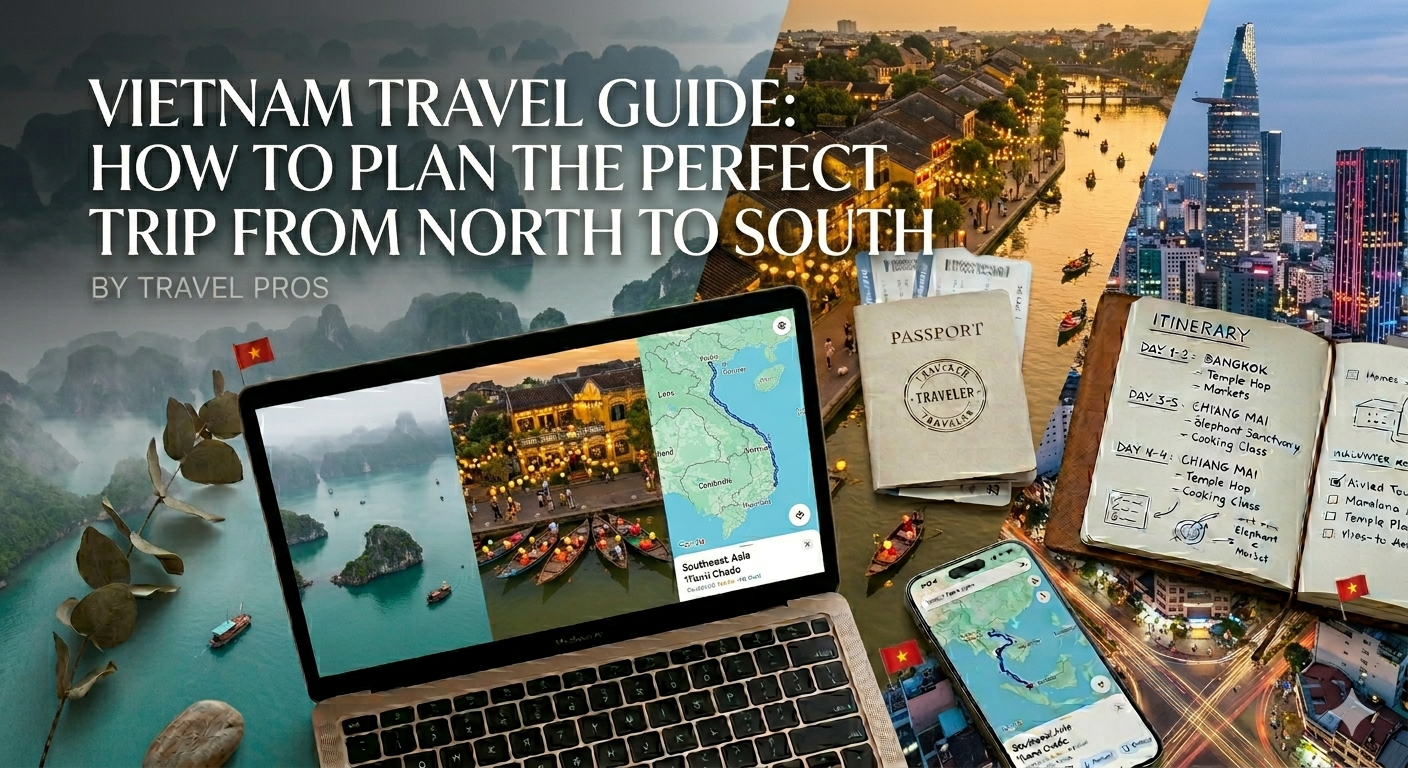
Hanoi and Ha Long Bay
Start in Hanoi. The city feels chaotic at first, but that is part of its rhythm. Street food, motorbikes, and colonial architecture all blend into something uniquely Vietnamese.
Spend two to three days here adjusting to the culture and exploring the Old Quarter.
From Hanoi, take a trip to Ha Long Bay. This is one of the most iconic landscapes in Southeast Asia, with limestone karsts rising out of emerald water.
An overnight cruise is worth it. Day trips feel rushed and miss the quiet moments that make the experience special.
Travel insight: Book Ha Long Bay cruises carefully. Prices vary widely, and cheaper options often mean overcrowded boats and lower-quality food.
Central Vietnam: Da Nang, Hoi An, and Hue
Fly or take a train south to Da Nang. From here, you can access three distinct experiences within a short distance.
Hoi An is the standout. It is easily one of the most charming towns in Southeast Asia and my favorite to date! Lantern-lit streets, riverside cafes, and tailor shops make it feel curated but still authentic.
Stay at least two to three nights. Many travelers regret rushing through Hoi An.
Da Nang itself offers beaches and a more modern city feel. It works well as a base.
Hue, slightly north, adds historical depth. It was once the imperial capital, and the citadel complex gives important context to Vietnam’s past.
Travel insight: The Hai Van Pass between Hue and Da Nang is one of the most scenic coastal drives in the world. If time allows, do this by motorbike or private car instead of skipping it.
Southern Vietnam: Ho Chi Minh City (Saigon) and the Mekong Delta
End your trip in Ho Chi Minh City. It is faster, louder, and more commercial than Hanoi, but the energy is addictive.
Spend two to three days exploring markets, cafes, rooftop bars, and historical sites like the War Remnants Museum.
From here, take a day trip or overnight trip to the Mekong Delta (this is best accessed by the town Can Tho). This region shows a completely different side of Vietnam, where life revolves around the river.
Floating markets, small villages, and agricultural life give you a deeper understanding of the country beyond cities and tourist centers.
Travel insight: The Mekong Delta is best experienced early in the morning (5:30am is common to begin your journey by boat). That is when markets are active and the atmosphere feels authentic.
Getting Around Vietnam Efficiently
Vietnam is long, so transportation strategy matters.
Flights are the best option for covering long distances quickly. Domestic flights are affordable and save significant time. I’ve had no issues using Viet Jet and Vietnam Airlines for domestic flights.
Trains are a scenic alternative, especially between central regions. The Reunification Express offers beautiful coastal views but moves slower.
Buses are the cheapest option but vary in comfort. Sleeper buses can be efficient but are not ideal for everyone.
Smart strategy: Combine flights for long distances with trains or cars (Grab) for shorter, scenic routes.
When to Visit Vietnam
Vietnam’s weather varies by region, which is why timing matters more here than in smaller countries.
The best overall window is March to April. During this time, most regions have favorable weather.
Northern Vietnam has cooler winters and can get foggy in places like Ha Long Bay.
Central Vietnam experiences heavy rains and occasional typhoons from September to November.
Southern Vietnam stays warm year-round but has a rainy season from May to October, usually with short afternoon showers.
Travel insight: Do not try to chase perfect weather across the entire country. It rarely aligns. Instead, plan around “good enough” conditions.
Budget Expectations
Vietnam is one of the best value destinations in the world.
You can travel comfortably on a moderate budget without sacrificing experience.
Meals are often just a few dollars, even at highly rated local spots.
Hotels range from budget-friendly to luxury at a fraction of Western prices.
Transportation, tours, and activities are also relatively affordable.
Key insight: The biggest price jumps happen when you choose convenience. Flights, private transfers, and premium tours increase costs, but they often save time and improve the experience.
What Most Travelers Get Wrong
Many first-time visitors overpack their itinerary.
They try to see every major destination, underestimate travel time, and end up spending more time in transit than actually enjoying Vietnam.
Another common mistake is underestimating how different each region feels. Vietnam is not one uniform experience. It changes constantly as you move through it.
Lastly, many travelers rely too heavily on Western-style planning and miss local experiences. Some of the best meals, cafes, and moments happen without a strict plan.
How to Make Your Trip Feel Effortless
The difference between a stressful trip and a smooth one comes down to a few key decisions.
Book your major transportation in advance, especially flights.
Leave room in your schedule for flexibility. Vietnam rewards wandering.
Use apps like Grab for transportation. It removes the stress of negotiating prices.
Withdraw cash locally instead of exchanging large amounts ahead of time. You typically get better rates and always avoid exchanging currency at an airport if possible.
Stay organized with documents, bookings, and daily plans so you are not figuring things out in the moment.
Building a Vietnam Trip That Actually Flows
The best Vietnam trips are not the ones that cover the most ground. They are the ones that feel intentional.
Start with a clear route. Give each region enough time to breathe. Prioritize experiences over checklists.
Vietnam has a way of surprising you when you slow down. It is in the street food stalls, the quiet morning coffee, the conversations, and the unexpected views.
Plan smart, move efficiently, and leave space for the moments you cannot schedule.
That is when Vietnam stops feeling like a destination and starts feeling like an experience you will want to return to.
Leave a Reply