
Disclosure: This post may contain affiliate links. As an Amazon Associate, I earn from qualifying purchases.
Ecuador Is Four Countries in One
Most travelers think of Ecuador as a small country you pass through on the way to the Galapagos. That is one of the more expensive misunderstandings in South American travel. Ecuador is, by almost every measure, one of the most geographically dense and experientially rich countries on the continent, and the travelers who discover that tend to stay longer than they planned.
In roughly the same landmass as the state of Nevada, Ecuador packs together a Pacific coastline, one of the most accessible stretches of the Amazon basin, a spine of Andean highlands lined with active volcanoes, and the Galapagos Islands sitting 600 miles offshore. Each of those environments is a genuine destination in its own right. Together, they make Ecuador one of the best arguments for slowing down and actually exploring a single country instead of trying to cover half a continent.
This Ecuador travel guide covers what to see, when to go, how to get around, and the logistical details that most destination articles skip.
What to Know Before You Arrive
Ecuador runs on the US dollar, which removes the currency headache that comes with most South American destinations. The country also sits directly on the equator, which sounds obvious until you realize it means the highlands have nearly constant 12-hour days and remarkably stable temperatures year-round, while the coast and Amazon follow their own distinct seasonal patterns.
Quito sits at 9,350 feet above sea level. Altitude sickness is real and it affects even experienced travelers who fly in from sea level. Plan to spend at least your first day moving slowly, drinking water, and letting your body adjust before you start climbing anything or attempting aggressive itineraries. Most experienced travelers skip alcohol entirely on arrival day.
The country uses two time zones in practice: mainland Ecuador (ECT, UTC-5) and the Galapagos Islands (GALT, UTC-6). It is a small detail, but worth noting when booking connecting domestic flights.
The Four Regions and How to Choose
The Andes and the Avenue of the Volcanoes
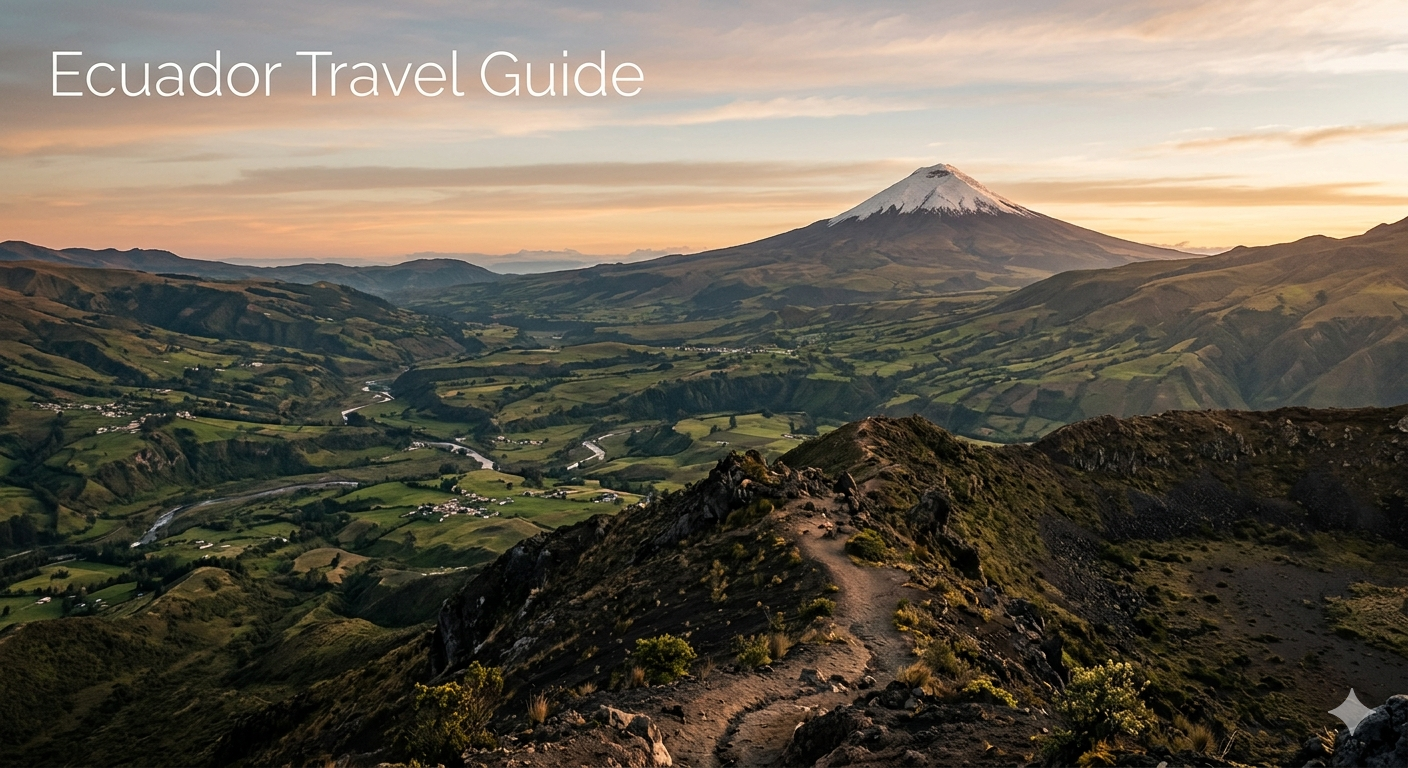
The highland spine running through Ecuador is called the Avenue of the Volcanoes, a name coined by Alexander von Humboldt in the 19th century and still entirely accurate today. Quito sits at one end, Cuenca at the other, and between them you will find Cotopaxi (one of the world’s highest active volcanoes), the hiking circuits around Quilotoa Crater Lake, and the famous Otavalo indigenous market, which is one of the most legitimately impressive craft markets in all of South America.
Quito itself is worth more than a transit day. The historic Old Town is a UNESCO World Heritage Site and one of the best-preserved colonial centers on the continent. The Church of La Compania de Jesus alone is worth making time for, with an interior that is almost overwhelming in its Baroque detail. Plan at least two nights in the city to do it justice.
The Galapagos Islands
The Galapagos deserves its own article, but the key practical point in any Ecuador travel guide is this: visiting independently from the mainland is entirely possible and significantly cheaper than booking a cruise. Budget for the Galapagos National Park entrance fee (currently $200 for most international visitors), book inter-island ferries in advance during high season, and consider staying on Santa Cruz or San Cristobal as a base rather than committing to a liveaboard cruise if cost is a factor. The wildlife encounters, including swimming with sea lions and walking among completely fearless iguanas, are largely the same whether you are on a cruise ship or a budget hostel.
The Amazon
The Ecuadorian Amazon, centered around the town of Tena and the province of Napo, offers some of the most accessible entry points into the Amazon basin anywhere in South America. You can reach it by bus from Quito in roughly five hours. Indigenous-run lodges in the region offer genuinely immersive experiences, and the relative ease of access makes this the Amazon that first-time visitors tend to find most manageable.
The Pacific Coast
Ecuador’s coast is largely overlooked by international travelers and that is its strength. Montanita is the party town with surf culture and a backpacker scene, but the more interesting areas are farther north. The cloud forest that spills toward the coast near Mindo is extraordinary for birdwatching, and Manta serves as a launching point for whale watching from June through September.
When to Go
Ecuador does not have a single best travel season because each region follows different weather logic. The highlands are at their clearest from June through September, when dry skies make volcano views more reliable. The Amazon receives heavy rain almost year-round, with slightly drier windows from November through January. The Galapagos is genuinely good any time of year, though June through December brings cooler, clearer water for diving and snorkeling.
The safest general guidance: if you are planning a broad Ecuador trip covering multiple regions, aim for June through August. If the Galapagos is your priority, you can go nearly any month and adjust expectations based on which animal activity peaks at different times.
Getting Around
Domestic flights between Quito and Guayaquil, or between the mainland and the Galapagos, are the only connections that genuinely require air travel. For most other regional movement within the Andes and down to the coast or Amazon, Ecuador has a well-developed bus network that is both affordable and reasonably comfortable on major routes.
Taxis and app-based rides work well in Quito and Guayaquil. In smaller cities, negotiate the fare before you get in. Renting a car is an option for the highlands but requires comfort with mountain road driving and occasional unmarked detours.
Budget Framework
Ecuador is moderately priced by South American standards. A mid-range independent traveler spending wisely can budget around $70 to $100 per day for accommodation, food, transport, and attractions on the mainland. The Galapagos adds significant cost regardless of how you approach it, largely due to park fees and inter-island logistics. Budget an additional $150 to $300 per day for a Galapagos portion of any trip, depending on your lodging choice.
The Part Most Ecuador Travel Guides Miss
The food scene in Quito’s Mariscal district and in Cuenca’s centro has evolved considerably. Ecuador now has a legitimate reason to eat well at every price point, from hole-in-the-wall ceviche counters near the coast to creative Andean cuisine restaurants in Quito that are quietly building international reputations. Llapingachos (potato cakes with cheese) and seco de pollo (a chicken braise with cilantro and beer) are the two dishes to order before you leave the country.
Go Further Than You Planned
The travelers who come back from Ecuador sounding genuinely changed are rarely the ones who spent five days in the Galapagos and flew home. They are the ones who took the bus up to Otavalo on a Saturday market morning, stopped in Banos on the way east, made it to a jungle lodge in Napo, and then circled back through Cuenca before their flight. Ecuador rewards the traveler who stays curious and keeps moving.
Leave a Reply