
When travelers talk about their favorite destinations, they rarely mention happiness rankings. They talk about how a place made them feel.
They remember the ease of navigating a city, the friendliness of locals, the feeling of safety when walking at night, and the sense that daily life simply works. Those experiences often reveal something deeper about a destination than its famous landmarks ever could.
The happiest countries in the world for 2026 offer more than beautiful scenery. They consistently provide high quality of life, strong communities, efficient infrastructure, and environments where both residents and visitors can thrive. While happiness rankings are typically measured through factors such as social support, healthcare, freedom, trust, and economic stability, travelers experience those benefits in surprisingly tangible ways.
From Nordic fjords and alpine villages to coastal cities and island escapes, these countries have become global examples of what a well-balanced life can look like. They also happen to be extraordinary places to visit.
Why Happiness Matters to Travelers
Most people choose destinations based on attractions, weather, or bucket-list experiences. Yet some places leave a lasting impression because everyday life feels smoother, calmer, and more enjoyable.
Happy countries often share characteristics that improve the travel experience:
- Reliable public transportation
- Low crime rates
- Clean public spaces
- Strong environmental protections
- Friendly local cultures
- Efficient tourism infrastructure
These factors create less stress and more opportunities for meaningful experiences.
What many travelers discover is that happiness is contagious. When communities are thriving, visitors often feel the difference immediately.
1. Finland
For several years, Finland has consistently ranked among the happiest nations on Earth, and it is easy to understand why once you arrive.
The country blends modern efficiency with extraordinary access to nature. In Helsinki, sleek design, excellent public transportation, and walkable neighborhoods make exploring effortless. Venture outside the capital, and you’ll find thousands of lakes, endless forests, and a culture deeply connected to the outdoors.
One information jewel many travelers overlook is Finland’s concept of “Everyman’s Right.” This allows people to responsibly enjoy much of the natural landscape, including hiking, berry picking, and camping in many areas.
For visitors, this translates into a rare sense of freedom that is increasingly difficult to find elsewhere.
2. Denmark
Denmark has mastered the art of making everyday life enjoyable.
Copenhagen frequently appears on lists of the world’s most livable cities, and travelers quickly understand why. Bicycle lanes dominate the streets, waterfront spaces are vibrant and welcoming, and public services function remarkably well.
The Danish concept of “hygge” has become internationally famous, but experiencing it firsthand is different. Cozy cafés, candlelit restaurants, and a focus on simple pleasures create an atmosphere that encourages people to slow down and appreciate the moment.
Travelers often arrive expecting castles and colorful waterfronts. They leave talking about how comfortable and relaxed they felt.
3. Iceland
Few countries combine dramatic landscapes and community well-being quite like Iceland.
Despite its remote location and relatively small population, Iceland consistently ranks near the top of global happiness reports.
Visitors are drawn by waterfalls, glaciers, volcanoes, and geothermal lagoons, but many leave impressed by the country’s strong sense of trust and community.
One of the most surprising realities of Iceland is how safe it feels. Solo travelers frequently cite this as one of the most comfortable destinations they have ever visited.
That feeling of security allows travelers to focus entirely on exploration, whether driving the Ring Road or chasing the Northern Lights across the countryside.
4. Sweden
Sweden offers a compelling combination of innovation, sustainability, and natural beauty.
Cities like Stockholm balance modern urban living with remarkable access to green spaces and waterways. In fact, many visitors are surprised to learn that they can kayak through parts of Stockholm’s city center while surrounded by historic architecture.
Sweden’s emphasis on work-life balance extends into its travel culture. Locals value outdoor recreation, family time, and sustainable living.
For travelers seeking a destination that feels both sophisticated and grounded, Sweden consistently delivers.
5. Netherlands
The Netherlands consistently ranks among the world’s happiest countries, and much of that comes down to a remarkable balance between modern convenience and quality of life.
For travelers, this often reveals itself in small but meaningful ways. Cities are easy to navigate, public transportation is efficient, and cycling infrastructure allows visitors to explore like locals.
Amsterdam may receive the majority of international attention, but some of the country’s most rewarding experiences happen beyond the capital. Cities like Utrecht, Haarlem, and Maastricht offer historic architecture, vibrant café culture, and fewer crowds.
One travel insight many visitors discover too late is that the Netherlands rewards slow exploration. Renting a bicycle and spending time in smaller towns often creates a more memorable experience than rushing between major attractions.
The Dutch approach to work-life balance, environmental sustainability, and community planning creates an atmosphere that feels welcoming and surprisingly stress-free.
6. Norway
Norway often feels like nature designed a luxury travel experience.
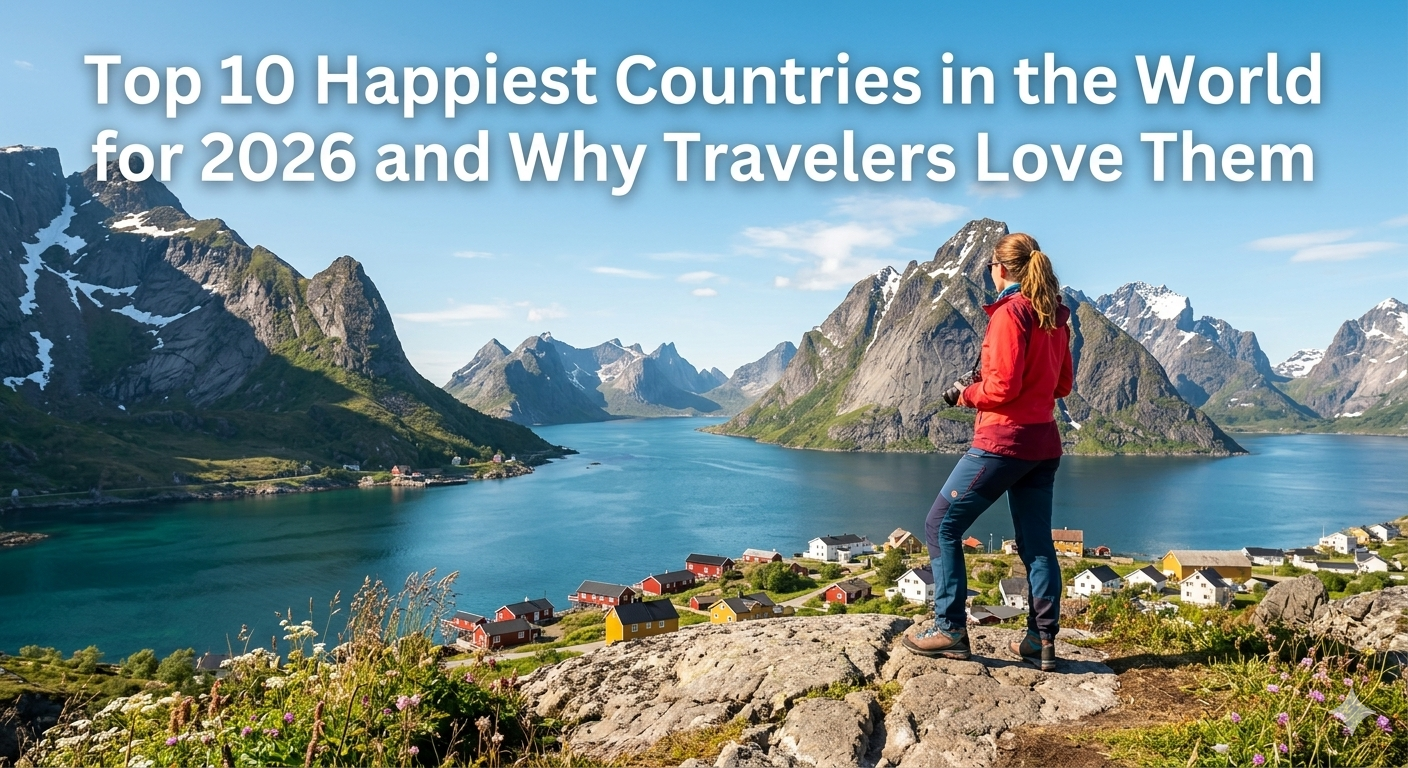
Towering fjords, dramatic mountain roads, colorful fishing villages, and pristine wilderness combine to create one of the most visually spectacular countries on Earth.
Yet Norway’s happiness extends far beyond its scenery.
The country places enormous value on outdoor recreation, environmental stewardship, and social well-being. Travelers quickly notice how accessible nature is, even in major cities.
In Oslo, for example, locals regularly take public transportation directly into forested hiking areas. This seamless connection between urban life and nature contributes significantly to the country’s high quality of life.
For visitors, Norway offers something increasingly rare: the opportunity to disconnect from stress without sacrificing comfort or convenience.
7. Switzerland
Few destinations blend efficiency, beauty, and comfort as successfully as Switzerland.
The country feels almost impossibly organized. Trains run with extraordinary precision, cities remain remarkably clean, and infrastructure makes even complex journeys surprisingly simple.
Travelers often arrive expecting postcard-worthy alpine scenery, and Switzerland certainly delivers. Snow-capped peaks, emerald lakes, and charming mountain villages seem to appear around every corner.
What many visitors don’t anticipate is how easy travel feels here.
One information jewel worth noting is Switzerland’s extensive rail network. Many travelers assume renting a car is necessary, but trains often provide a faster, more scenic, and less stressful way to experience the country.
The combination of natural beauty and exceptional organization creates a travel experience that feels effortless from beginning to end.
8. Luxembourg
Luxembourg may be one of Europe’s smallest countries, but it consistently performs well in measures of happiness and quality of life.
For travelers, that often translates into an underrated destination packed with charm.
The capital city, also called Luxembourg, offers dramatic fortifications, picturesque old-town streets, and an impressive blend of history and modernity.
One of the country’s most traveler-friendly advantages is free public transportation nationwide. Visitors can move throughout the country without worrying about train tickets or bus fares.
Because Luxembourg receives far fewer tourists than neighboring France, Germany, or Belgium, travelers often enjoy a more relaxed and authentic experience.
It’s the kind of destination that surprises people precisely because so few expect it to be remarkable.
9. New Zealand
New Zealand consistently earns praise for its breathtaking scenery, but its happiness ranking reflects much more than beautiful landscapes.
The country’s culture places a strong emphasis on community, outdoor recreation, and maintaining a healthy relationship with nature.
Travelers quickly discover that New Zealand encourages exploration. Whether hiking through national parks, driving coastal highways, or visiting wine regions, adventure feels woven into daily life.
One overlooked advantage for visitors is the country’s relatively uncrowded feel. Even many famous destinations provide opportunities to experience nature without overwhelming tourist congestion.
For travelers seeking freedom, open space, and unforgettable scenery, New Zealand remains one of the world’s most rewarding destinations.
10. Australia
Australia rounds out the list with a lifestyle that many travelers immediately find appealing.
The country’s combination of vibrant cities, outdoor living, diverse landscapes, and strong economy contributes significantly to overall happiness levels.
Sydney offers iconic harbor views and world-famous beaches. Melbourne delivers exceptional food culture and arts experiences. Beyond the cities, travelers can explore rainforests, deserts, reefs, and wine regions.
One travel reality that often surprises visitors is how much Australians prioritize outdoor activities. Beaches, parks, hiking trails, and public recreation spaces play an important role in daily life.
That emphasis on enjoying the outdoors helps create a culture that feels energetic, balanced, and welcoming.
For travelers, it often becomes one of the easiest countries in the world to enjoy.
What These Countries Can Teach Travelers
While each destination is unique, the happiest countries in the world share several important characteristics.
They prioritize quality over quantity.
They invest heavily in public spaces, transportation, healthcare, environmental protection, and community well-being.
They create environments where people spend more time outdoors, maintain stronger social connections, and experience less daily stress.
Travelers may not move to Finland, Norway, or New Zealand after a vacation, but they often return home with new perspectives about what makes life enjoyable.
That may be the most valuable souvenir of all.
Traveling Beyond the Bucket List
Many travel experiences focus on famous landmarks and must-see attractions. Those moments can certainly be memorable, but the happiest countries in the world remind us that great travel often happens in the spaces between major sights.
It’s the relaxed bike ride through a Dutch village.
The quiet evening beside a Finnish lake.
The ferry crossing through a Norwegian fjord.
The spontaneous conversation in a Danish café.
These destinations consistently rank among the world’s happiest not because they offer a single spectacular attraction, but because they have built environments where everyday life feels rewarding.
For travelers, that creates something increasingly valuable: a chance to experience not just a destination, but a different way of living.
Leave a Reply